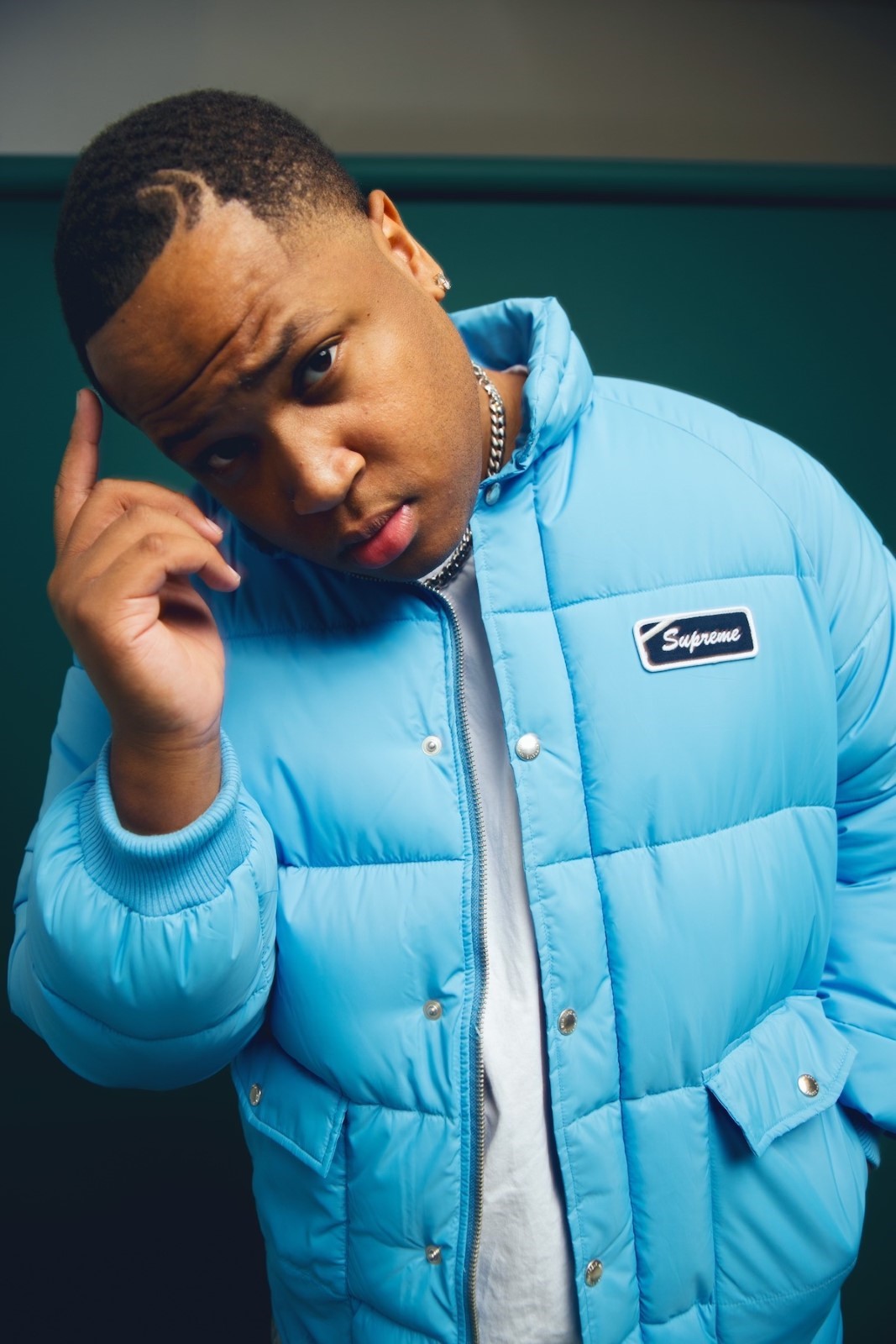
At just 25 years old, Aaron Cole has already carved out a path for himself in Christian hip-hop. From his beginnings in Bristol, VA, where he got his musical start at age four, to being signed by TobyMac as a teenager, Cole’s résumé includes scoring three #1 singles and making history as the first Christian hip-hop artist to win the Dove Award for New Artist of the Year. Now based in Nashville and with two Dove Awards under his belt and a Stellar Award nomination, Cole has entered a profoundly personal chapter of his artistic journey.
The release of his third album, Sorry, I Changed, and its deluxe edition showcased Cole’s ability to bridge generations through collaborations with industry greats Kirk Franklin and Kierra Sheard. Now, his three-song bundle OMARI—featuring Tauren Wells on “One Reason”—marks more than just another musical milestone. It represents a season of deep personal transformation. Becoming a first-time father to his son Omari in late October has infused his music with new depth and vulnerability. In this candid Q&A with GMF Editor-in-Chief Libra Boyd, he opens up about fatherhood, faith, and the beautiful, unexpected ways life continues to reshape his artistry.
Libra: Congratulations to you and your wife on the birth of your son, Omari!
It is apparent to me that becoming a father to Omari has profoundly influenced your recent music. How has preparing for and welcoming your son transformed your songwriting as well as your perspective on faith, creativity, and purpose?
Aaron: I feel like I’ve changed so much in the past few months. However, having Omari has made music honestly even more fun. It’s made me think about my legacy more and consider the things I’m saying even more because one day, when I’m long gone, he’s going to have my discography to listen to and learn things about me that he might not have even known. So I like to share more stories, and I like to think about how my music is impacting the listener even more now—whether it’s joy, relatability, praise, worship, or whatever it may be. It feels like a fresh wind.
Libra: Reflecting on your journey from a 4 year-old to a present-day 25 year-old Dove Award winner with three #1 singles, talk about how your understanding of music as a form of personal expression and ministry has evolved from then to now.
Aaron: When I was just starting, I feel like all I cared about was reaching people’s hearts for God. As you start to grow and become successful, something I learned is that it gets hard to keep going because of all the pressure that comes with success. Sales, elevation, and growth become factors, when at first all you cared about was reaching people and making great music. What I try to do is get back to the younger me every time I make a new project. It gets hard, but you’ve got to remember why you do what you do, and that’s what keeps the joy and the love for the art and the people in it.
Libra: Your collaboration with artists like Kirk Franklin and Kierra Sheard suggests a deep respect for musical legacy. Who are the artists—within and outside of Christian hip-hop—that have most notably shaped your artistic voice and spiritual path?
Aaron: For sure. Those were dreams that came true for me. I grew up listening to both of their music. I feel like they, along with Mali Music, Da’ T.R.U.T.H., Tye Tribbett, and I’m sure a few others, have shaped me on this journey. Tye is probably the only one I grew up listening to that I haven’t worked with yet, so I’m looking forward to that happening one day. It’s a blessing to work with people you’ve admired throughout your life journey.
Libra: The title of your third album, Sorry, I Changed, feels like a powerful statement about personal growth. We’d love to hear about the specific experiences or moments that inspired you to create it.
Aaron: The whole concept is that real life changes you, God changes you, life changes you. A lot of the songs talk about the struggles of life and the things we go through, and some of the songs reflect the hopeful side of things—how we have faith because of God that we’re going to make it through the challenges we face in our everyday lives. When you change and the people around you feel that change, you sometimes actually feel remorse. The Bible talks about change all the time—fishermen becoming fishers of men, being transformed by the renewing of your mind—and if God wasn’t changing us and taking us somewhere, we wouldn’t need a lamp unto our feet and a light unto our path.
Ultimately, it’s also the gospel, because when you meet God, your life changes completely. And last but not least, when I made Sorry, I Changed, there were just so many changes in my life. It was my first year married, my first year on a new label—a lot of things had actually changed in my life. So I just feel like the title is so fitting for the season I’m in right now.
Libra: Christian hip-hop often navigates complex spaces between artistic authenticity and spiritual messaging. How do you approach creating music that feels genuine to both your artistic vision and your faith?
Aaron: I think, for me, it’s just about being honest. I’m honest about my struggles, I’m honest about my wins, and I’m also honest about my relationship with God. I think being honest about my journey with God helps me navigate the complex things I have to handle when making music.
Libra: Your music seems to bridge generational and genre gaps—working with established artists while bringing a fresh perspective to Christian hip-hop. What do you see as the most exciting opportunities and challenges for your generation of artists?
Aaron: I think the most exciting thing is being able to present God to my generation and others in a new way. I feel like it’s amazing that being honest about my struggles and my relationship with God can inspire someone else on their journey. The challenges, I feel, definitely come from the industry and the standards of what it actually means to make music for God. It feels like I’m breaking barriers every day in this genre. So I’m looking forward to seeing how the sacrifices affect the genre and impact the culture.
Libra: OMARI is your new, deeply personal three-song project—it’s named after your son. Beyond the music, what are the life lessons you hope to eventually share with Omari about faith and finding one’s path?
Aaron: I’m honestly just super excited to walk with him on his journey through life, whatever it may be. It’s going to be exciting to see what he gravitates toward and becomes passionate about. I just want to share with him that anything is possible with God and hard work and that being patient and operating in God’s peace in any circumstance will go a long way.
Libra: If your musical journey to date could tell a story to listeners, what narrative would you want them to hear—and how does the OMARI project represent the next chapter of that unfolding story?
Aaron: I say this all the time, but I want people to be inspired in every way when they listen to my music. I make music for everyone with a dream like me—sitting in class, sitting at work, wishing your dream would come true. People said you’d never be anything because of your circumstances, where you’re from, etc. But God says something different about us, and God has a plan for all His children.

Libra Nicole Boyd, PhD is a musician, award-winning author, gospel music aficionado, and the founder and editor of Gospel Music Fever™. Her commitment to journalistic integrity includes bringing you reliable gospel music content that uplifts and advances the art form. Libra is presently working on several scholarly projects about gospel music in the media as well as gospel music in social movements.